A pump head costs less than a dollar, yet it decides whether your customer's first experience of your brand is a smooth, clean pump — or a sticky, dripping mess on their hands. These are the tests every Lonyard pump head goes through before it leaves the factory.
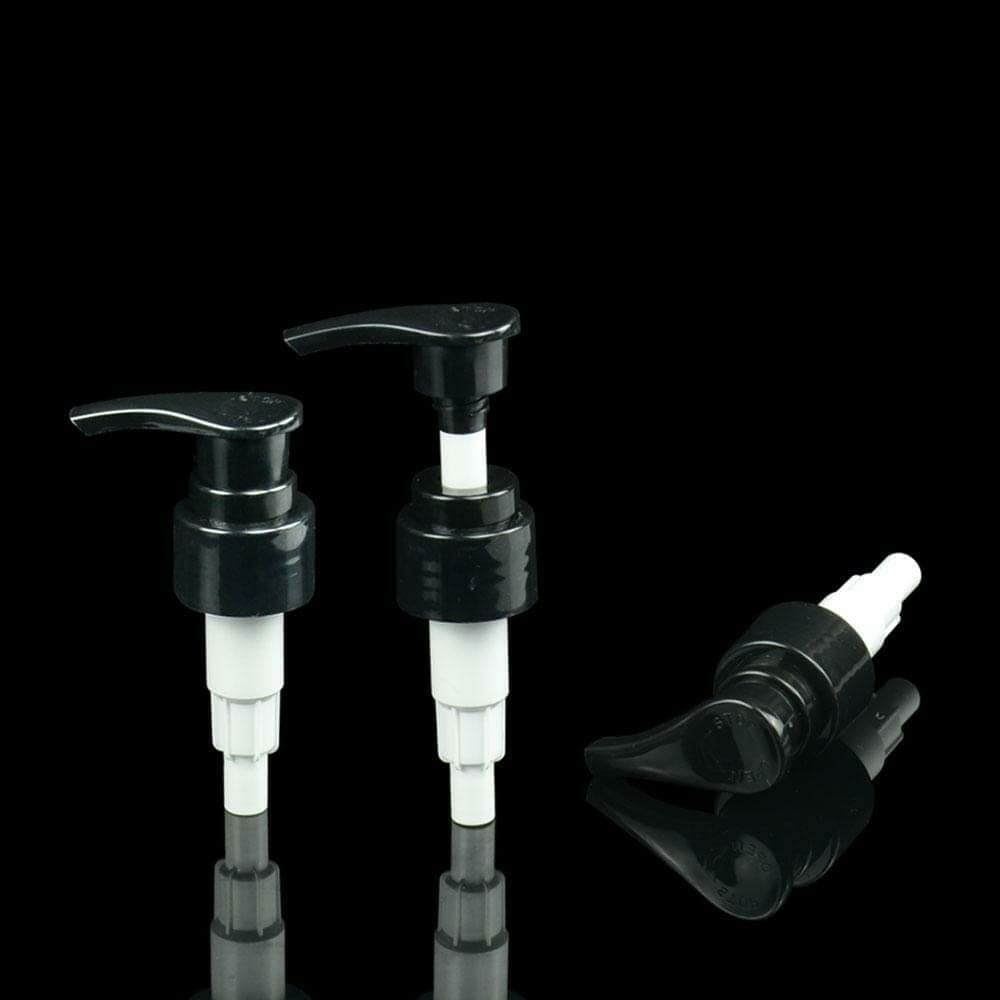
If you make filled products — body lotion, serum, cleanser, shampoo — the pump is the part your customer touches every single day. The bottle gets judged once; the pump gets judged twice a day. That is why pump testing sits at the core of our packaging line QC. It is cheap insurance: an extra hour of testing on the Shenzhen floor avoids a whole batch of complaints — or a full container that leaks apart after crossing the ocean.
Why Pumps Fail in Real Use
Across the pump complaints buyers have brought us, almost all trace back to five root causes:
- Leakage in transit — air-pressure changes and vibration on the ocean leg push product up the dip tube and out around the actuator.
- Inconsistent output — the first few presses fire air, or the dose jumps between 0.8 ml and 1.5 ml per stroke.
- Stiff press, slow return — a gritty feel or sluggish rebound, usually a spring-and-seal tolerance issue.
- Dip tube too long or too short — an over-long tube kinks and blocks; a short one leaves roughly 15% of an expensive serum unreachable at the bottom of the bottle.
- Chemical incompatibility — certain oils and actives swell seals within weeks, and the pump starts dripping on the shelf.
None of these show up by eyeballing parts. They only surface under test. Here is how we test.
The Six-Step Pump Test
Step 1 · Press Smoothness — 200 Presses Per Sample
Every sample is pressed 200 times straight from the bag. We check that the first press is smooth (no dry start), the spring returns fully, and the force stays consistent from press one to press 200. A pump that feels great on press 3 but starts to drag by press 80 is rejected.
Step 2 · Output Volume — Measured in a Graduated Cylinder
Standard output is typically 1.0–2.0 ml per stroke depending on model. We take 10 consecutive pumps into a graduated cylinder and average them; anything outside ±10% of spec, or visibly uneven, is rejected. This protects consumer perception: a bottle labeled "30-day supply" that only lasts 22 days is a negative review waiting to happen.
Step 3 · Leakage and Shipping Simulation
Filled, assembled bottles get two checks: a 24-hour inverted rest (actuator down, watching the seal between actuator and neck for seepage), and a vibration-and-air-pressure test that simulates ocean freight. For ocean orders we also recommend a leak-proof clip or seal over the orifice — tailored to your destination market.
Step 4 · Dip Tube Length and Cut
Tube length is matched to your actual bottle height — not a generic spec. We confirm the tube reaches the bottom corner (with a diagonal, not flat, cut), won't kink at the base, and we verify priming: the first 3–4 pumps should deliver product.
Step 5 · Compatibility Soak Test
For new formulas — especially high-oil or high-active products — we soak the pump's seals in your actual product for 2–4 weeks, then re-test press feel and output. It is the step most suppliers skip, and the one that prevents the "starts leaking six weeks after shelfing" complaint emails.
Step 6 · Whole-Bottle Drop Test
Filled and sealed bottles drop from 1 meter onto a hard floor in three orientations. The pump must not crack, pop off, or leak. E-commerce parcels get the roughest handling, so this step matters most to online-channel brands.
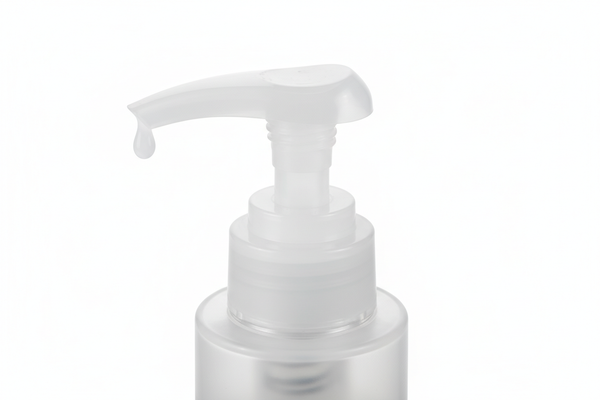
The Detail Most Buyers Miss: Test Every Color
The lazy shortcut is to test only the white pump and assume the black one behaves identically. It does not always. Pigments and masterbatch change how PP plastic flows in the mold, which subtly shifts sealing tolerance. At Lonyard, every color runs through the same press and leak checks. Our four standard colors — white, black, peach pink, transparent — each complete the full flow.
A pump that survives 200 presses, a night upside down and a drop test will survive your customer's bathroom counter. One that can't will sink the rating no matter how good the bottle looks.
What This Means for Your Order
| Item | What We Provide |
|---|---|
| Standard colors | White, black, peach pink, transparent — stock molds, mix colors per order. |
| Neck spec | Common standards include 24-410 / 28-410, matched to your bottle. |
| Customization | Pantone color matching, logo printing, locking actuator, leak-proof clip & seal. |
| Testing | Full six-step flow; compatibility soak for new formulas. |
| Sampling | 3–7 days on stock-mold samples. |
| MOQ | 10,000 pcs per SKU in existing colors; 20,000 pcs for custom colors. |
| Delivery | FOB (port confirmed per order). |
Every pump order ships with batch-by-batch inspection records. If you want third-party inspection, you're welcome — our internal standard is designed to pass stricter checks than most inspectors run.
Need Pumps That Survive the Ocean Leg?
Send us your bottle spec or product idea — we'll match a suitable pump, run the full test set on samples, and reply within 24 hours.
Frequently asked questions
What tests do Lonyard pumps go through before shipping?
Each sample is pressed 200 times, output is measured in a graduated cylinder, filled bottles rest upside down for 24 hours and drop from 1 m in three orientations, and new formulas get a 2–4 week compatibility soak. Every color is tested separately.
What is the MOQ for pump heads?
10,000 pcs per SKU in existing colors (white, black, peach pink, transparent); 20,000 pcs for custom colors.
What neck sizes do you support?
Common standards include 24-410 and 28-410, matched to your bottle.
Can I customize pumps?
Yes — Pantone color matching, logo printing, locking actuators and leak-proof clips are all available.
How fast is pump sampling?
3–7 days on stock-mold samples.